Case Study · Pest Control
How a Phoenix pest control company stopped missing calls.
Every missed call was a missed job. Here's the automated system that fixed it, and what changed once it went live.
At a glance
- ✓500+ calls handled automatically every month
- ✓Zero missed leads
- ✓No receptionist required
- ✓Roughly 5 hours saved daily
The Challenge
Pest control is a phone-driven business. A customer with an ant problem or a wasp nest usually wants service the same day, and if nobody picks up, they call the next company on the list instead of leaving a voicemail. For a growing pest control operator, that meant every unanswered call during a busy route, an early morning, or after hours was a job walking straight to a competitor.
Hiring a full-time receptionist to cover that gap comes with its own cost, both in salary and in the limits of what one person can realistically handle during peak call volume. The business needed calls answered reliably, every time, without adding that overhead, and without losing control over how customers were being quoted.
What We Built
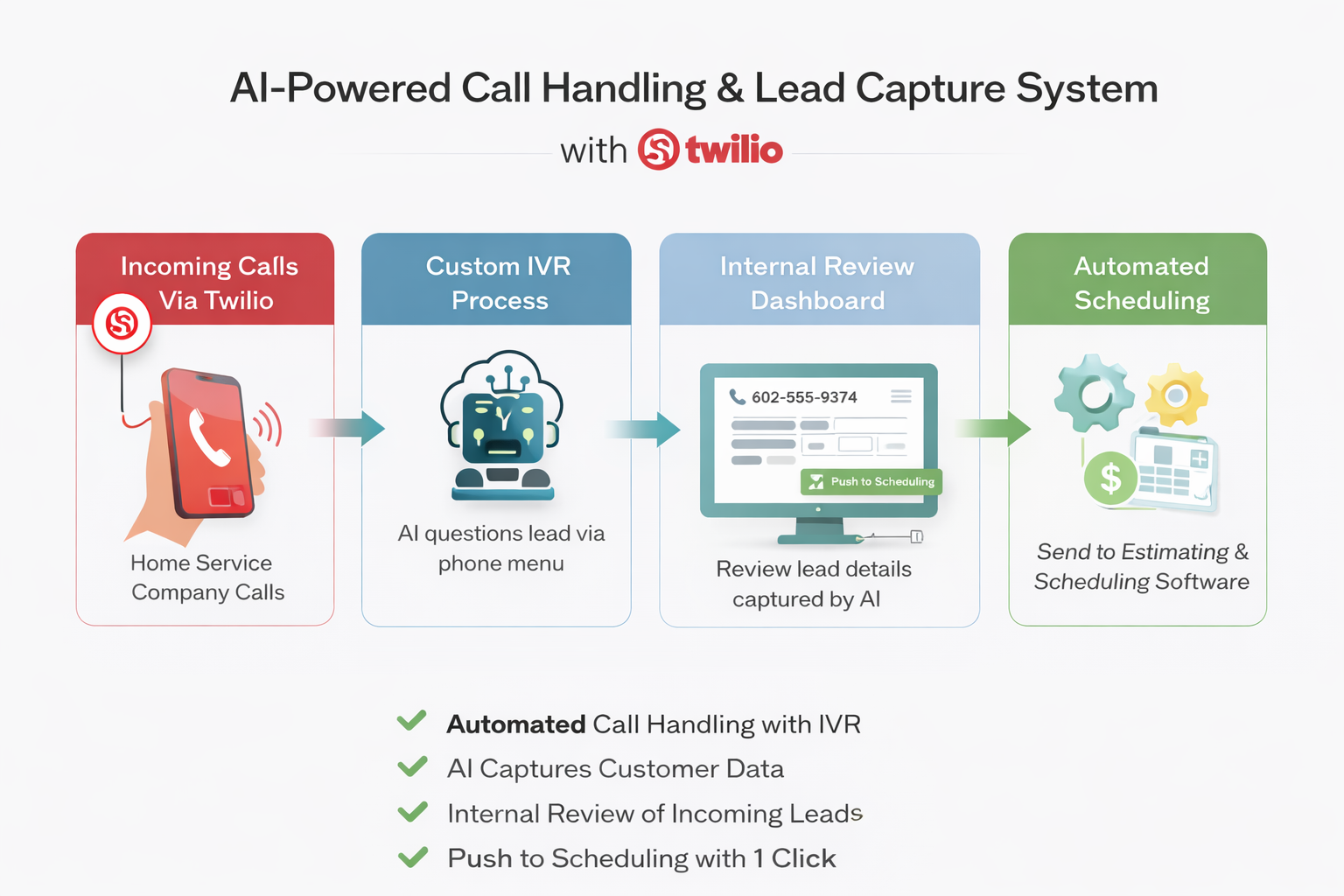
We designed and built a Twilio-based automated call answering system, one that picks up every inbound call, captures the caller's information, and logs it as a lead automatically, with no one manually monitoring the phone line. From there, the system gives the owner a choice in how quotes get handled, rather than forcing every interaction down the same path.
How It Works
When a call comes in, the system answers it directly rather than routing it to a person first. Caller information is captured and logged automatically, creating a lead record without any manual data entry.
From that captured record, the owner controls what happens next. With automated estimates toggled on, the system sends the customer an estimate for service automatically based on the details captured during the call. With that option toggled off, the record simply waits for a team member to review it and send the estimate manually. Either way, no lead sits unanswered or gets lost waiting to be picked up, the only thing that changes is who sends the actual quote.
Because the process runs the same way on every call, the business gets consistent handling whether it's the middle of the day or after hours, whether the team is out on jobs or the office is empty.
The Results
The system now handles more than 500 inbound calls a month automatically. Every one of those calls becomes a captured lead instead of a missed opportunity, meaning the business is no longer losing jobs simply because nobody was free to answer the phone. It also removed the need for a dedicated receptionist entirely, while giving the owner back roughly 5 hours a day that were previously spent on call handling and follow-up, all without giving up control over how and when estimates go out.
The Takeaway
The fix here wasn't a fancier phone system, it was designing around the actual failure point: calls going unanswered at the exact moments the business could least afford it. Just as important, the fix didn't force an all-or-nothing choice between full automation and full manual control. The owner decides where automation ends and human judgment picks up, which is exactly how it should work.
Your operation is next.
The audit is free. If there's nothing worth automating, we'll tell you.