Case Study · E-commerce Fulfillment
An AI-powered fulfillment system for an e-commerce brand.
Orders arrived in every format imaginable. Here's the system that reads them all the same way, without a person typing a single field.
At a glance
- ✓Orders extracted automatically from PDFs, emails, and attachments
- ✓SKUs, addresses, and quantities captured without manual entry
- ✓Orders pushed directly into Shopify and shipping software
- ✓No manual re-typing required before fulfillment can begin
The Challenge
This e-commerce brand didn't receive every order in the same clean format. Orders arrived scattered across PDFs, emails, and attachments, each one requiring someone to open it, manually read through the details, and type the SKU, shipping address, and quantity into Shopify and the company's shipping software by hand before fulfillment could even start.
With orders coming in through multiple channels and formats, that meant every single one depended on a person correctly reading and re-entering the same handful of details, over and over, before a package could move. Any mistake in that manual step, a mistyped address, the wrong SKU, a missed quantity, didn't just cost time, it risked the wrong product going to the wrong customer.
What We Built
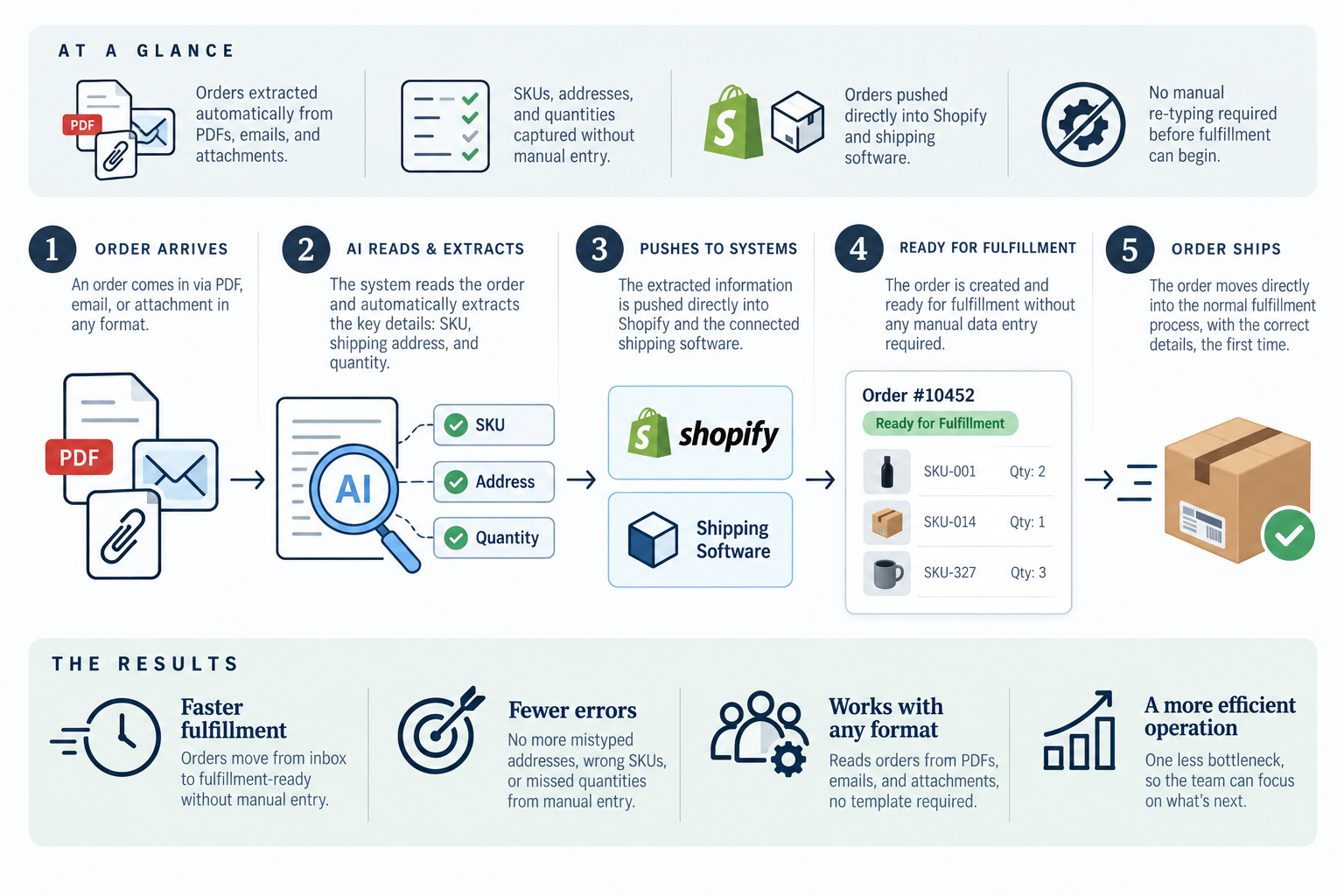
We built an AI-powered order processing system that reads incoming orders directly from PDFs, emails, and attachments, regardless of format, and automatically extracts the SKU, shipping address, and quantity from each one. Once captured, that information is pushed straight into Shopify or the client's shipping software, without anyone manually opening a file or typing a single field.
How It Works
When an order comes in, whether as a PDF attachment, the body of an email, or another document format, the system reads it and identifies the key details automatically: which SKU was ordered, the shipping address, and the quantity. Those details are then pushed directly into Shopify or the connected shipping software, arriving ready for fulfillment without a manual entry step in between.
Because the system reads the order regardless of the format it arrives in, the brand no longer needs a consistent order template or a single intake channel, orders from different sources are all processed the same way.
The Results
Orders now move from inbox to fulfillment-ready without anyone manually reading, transcribing, or re-typing order details. The brand no longer depends on a team member correctly catching every SKU, address, and quantity by hand across every order format that comes in, removing one of the most common points where manual fulfillment mistakes happen.
The Takeaway
The bottleneck here wasn't the number of orders, it was that every order, regardless of how it arrived, required a person to manually translate it into Shopify and the shipping software before anything could move. By having the system read and extract that information automatically, the brand removed a repetitive, error-prone step without changing how customers or partners actually send in their orders.
Your operation is next.
The audit is free. If there's nothing worth automating, we'll tell you.